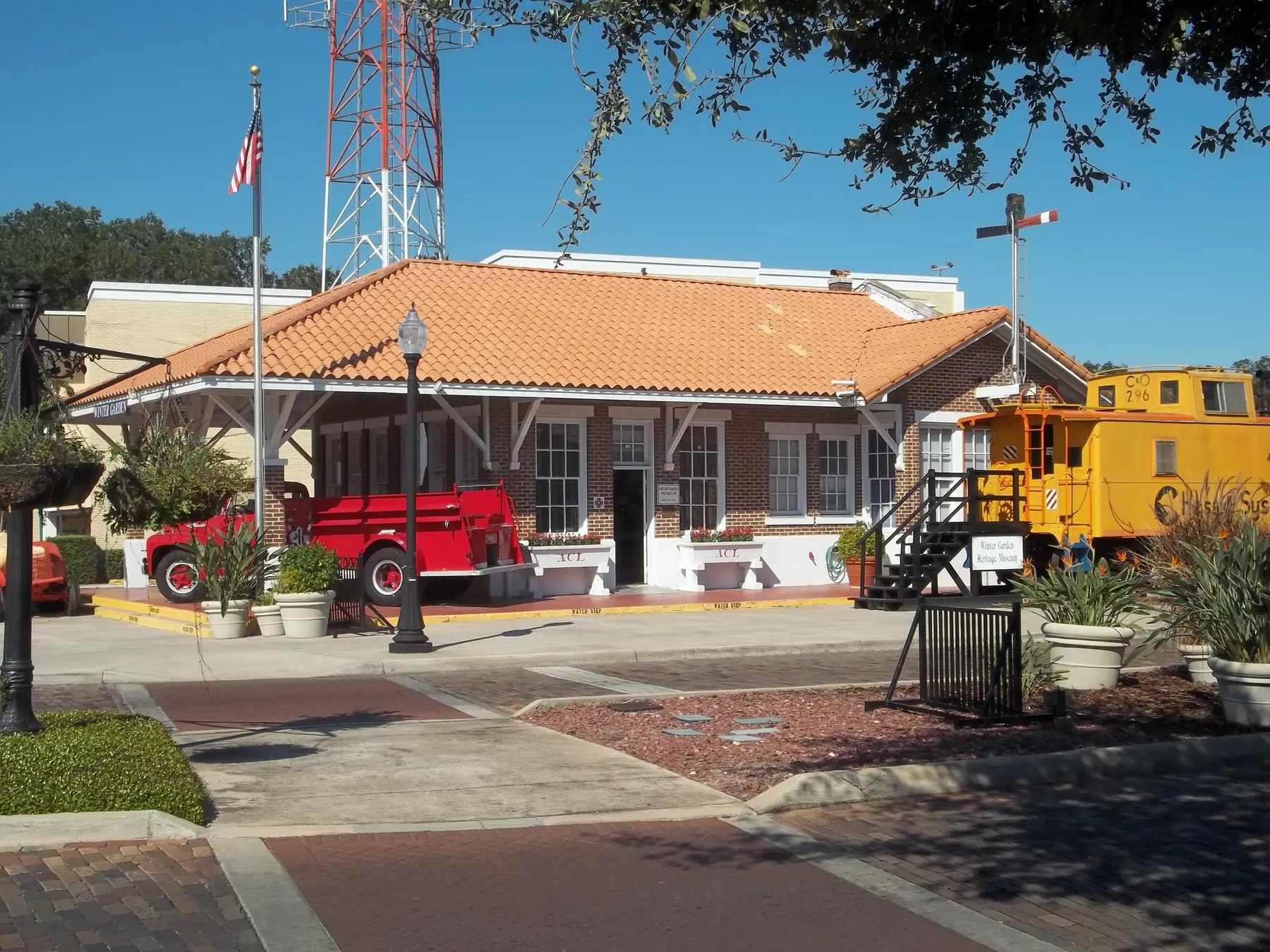
Winter Garden was established in 1903 and incorporated in 1908. Its downtown and residential districts joined the National Register in 1996. Museums and landmarks.
Last checked Oct. 10, 2026. History comes from the City of Winter Garden’s history page, written with the Winter Garden Heritage Foundation. National Register listings come from the National Park Service’s NPGallery records. Museum details come from the museums’ and the city’s own pages.
Winter Garden was established in 1903 and incorporated as a city in 1908, the city’s history page says. Its downtown, rebuilt in brick along Plant and Main streets after fires, was listed on the National Register of Historic Places on Aug. 1, 1996. The best place to start is the Winter Garden Heritage Museum, 1 N. Main St., 407-656-5544.
Visit
- Winter Garden Heritage Museum: 1 N. Main St., 407-656-5544, wghf.org
- Central Florida Railroad Museum: 101 S. Boyd St., 407-656-0559; Tuesday to Friday, 11 a.m. to 3 p.m., and Saturday, 10 a.m. to 3 p.m.; free admission
- History research center: Winter Garden Heritage Foundation, 21 E. Plant St., 407-656-3244
How Winter Garden began
From the city’s history:
- 1850s: settlers begin arriving, drawn by the fertile muck land bordering Lake Apopka. They grow citrus and vegetables in small settlements on the lake’s south shore.
- Late 1800s: a business district grows up beside the two railroad lines through town. After two fires destroy the wooden buildings and packinghouses on Plant and Main streets, the commercial buildings are rebuilt in brick.
- 1903: Winter Garden is established.
- 1906: an Atlantic Coast Line depot is built at Plant and Main streets.
- 1908: Winter Garden is incorporated as a city. A.B. Newton is its first mayor.
- 1920: the population passes 1,000, and the city is the center of commerce and agriculture in West Orange County.
- 1923: the brick depot that now houses the Heritage Museum replaces the 1906 station.
- 1927: the Edgewater Hotel opens to serve tourists drawn by Lake Apopka’s fame as the “large-mouth bass capital.”
- Late 1960s: growth slows. Lake Apopka is badly polluted, and new highways draw businesses away from downtown.
- 1996: downtown is listed on the National Register after residents and community leaders rally to save it. The West Orange Trail brings visitors back to the old buildings.
The city also credits the citrus packinghouses that once lined the area: the South Lake Apopka Citrus Growers Association packinghouse still stands on Tildenville School Road in Tildenville, on the city’s west side, and now houses small businesses.
National Register of Historic Places listings
Three Winter Garden properties are on the National Register, the National Park Service’s records show:
| Listing | Where | Listed |
|---|---|---|
| Winter Garden Downtown Historic District | Roughly bounded by Woodland, Tremaine, Henderson and Lakeview streets | Aug. 1, 1996 |
| Winter Garden Historic Residential District | Roughly bounded by Plant, Boyd, Tilden and Central streets | Aug. 1, 1996 |
| Luther F. Tilden House | 940 Tildenville School Road | Nov. 15, 1996 |
The residential district is a neighborhood of homes; respect private property when you visit. Work on buildings in the historic district is reviewed by the city’s Architectural Review and Historic Preservation Board.
Museums
Winter Garden Heritage Museum, 1 N. Main St., at the corner of Plant and Main streets, holds more than 5,000 artifacts on the area’s past, the city says. It is run by the Winter Garden Heritage Foundation and sits in the 1923 Atlantic Coast Line depot. Call 407-656-5544 for hours.
Central Florida Railroad Museum, 101 S. Boyd St., tells the story of the railroad’s role in Florida’s growth. It is open Tuesday to Friday, 11 a.m. to 3 p.m., and Saturday, 10 a.m. to 3 p.m., with free admission; donations are welcome, and food, drinks and pets are not allowed inside, its website says. It is operated by the Central Florida Railway Historical Society.
Garden Theatre on Plant, 160 W. Plant St., is a 295-seat movie house from 1935, modeled on a Spanish courtyard with balconies and a starry ceiling, the city says. It still shows films and stages plays.
Cemetery
Winter Garden Cemetery, 13636 Lake Butler Blvd., on Lake Roper at the southern edge of the city, was established as a municipal cemetery in 1924, the city’s cemetery page says. For records or visits, call the cemetery sexton at 407-656-4682.
What this means for you
- Walk downtown with the Heritage Museum as your first stop, then the Railroad Museum nearby on Boyd Street.
- The West Orange Trail runs past both; see our parks and trails guide.
- For the downtown today, see things to do this month.
Frequently asked questions
When was Winter Garden, Florida, founded?
The city says Winter Garden was established in 1903 and incorporated as a city in 1908. Its first mayor was A.B. Newton. Settlers had farmed the land along Lake Apopka since the 1850s.
Is downtown Winter Garden on the National Register of Historic Places?
Yes. The Winter Garden Downtown Historic District was listed on Aug. 1, 1996, the same day as the Winter Garden Historic Residential District.
What museums are in Winter Garden?
The Winter Garden Heritage Museum, 1 N. Main St., 407-656-5544, and the Central Florida Railroad Museum, 101 S. Boyd St., 407-656-0559, which is open Tuesday to Saturday with free admission.
Why is Lake Apopka important to Winter Garden’s history?
Settlers came for the fertile muck land along the lake, and Lake Apopka’s fame as the large-mouth bass capital drew tourists, leading to the Edgewater Hotel’s opening in 1927, the city says.
Have your say